Beschrijving
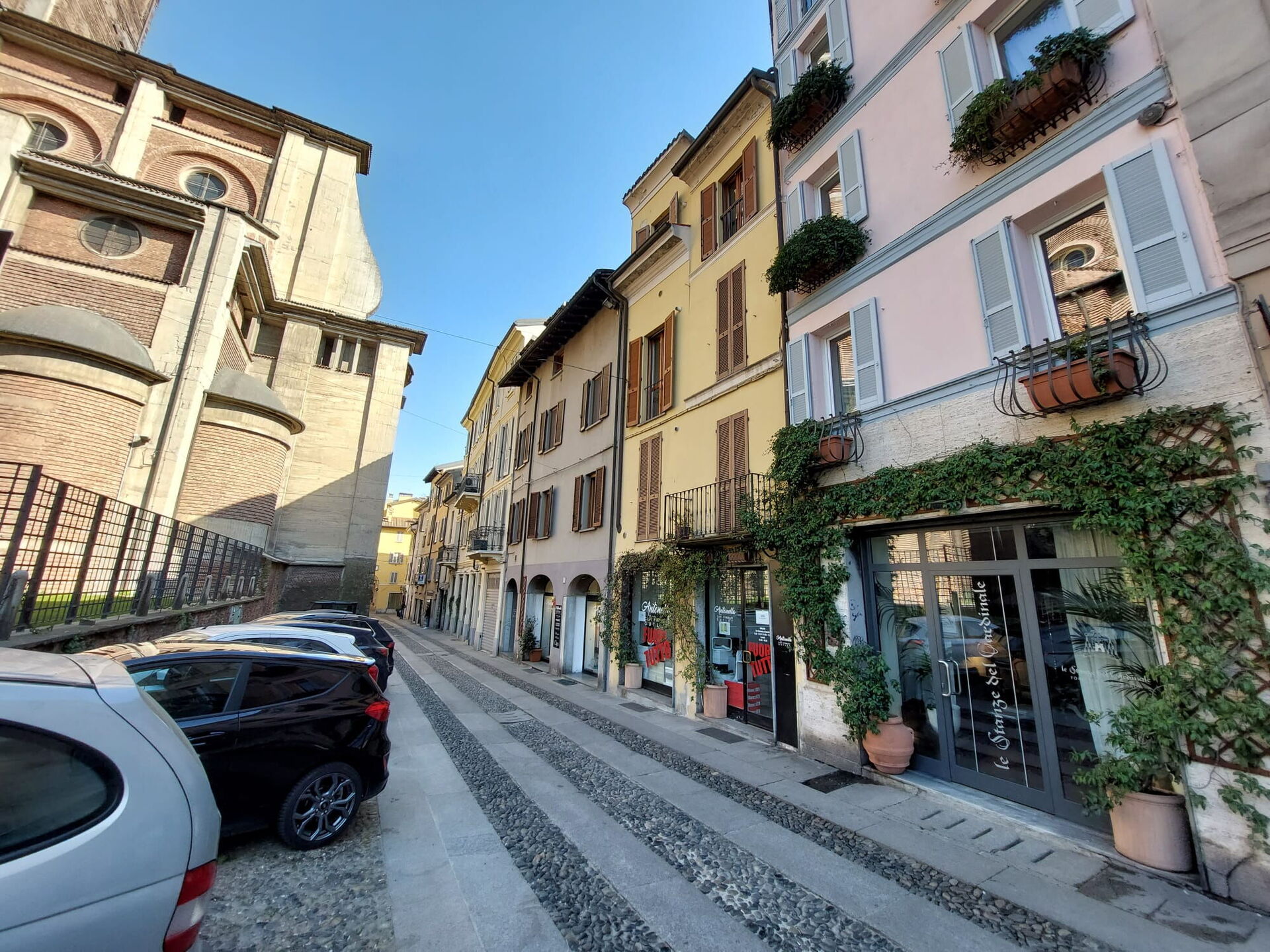
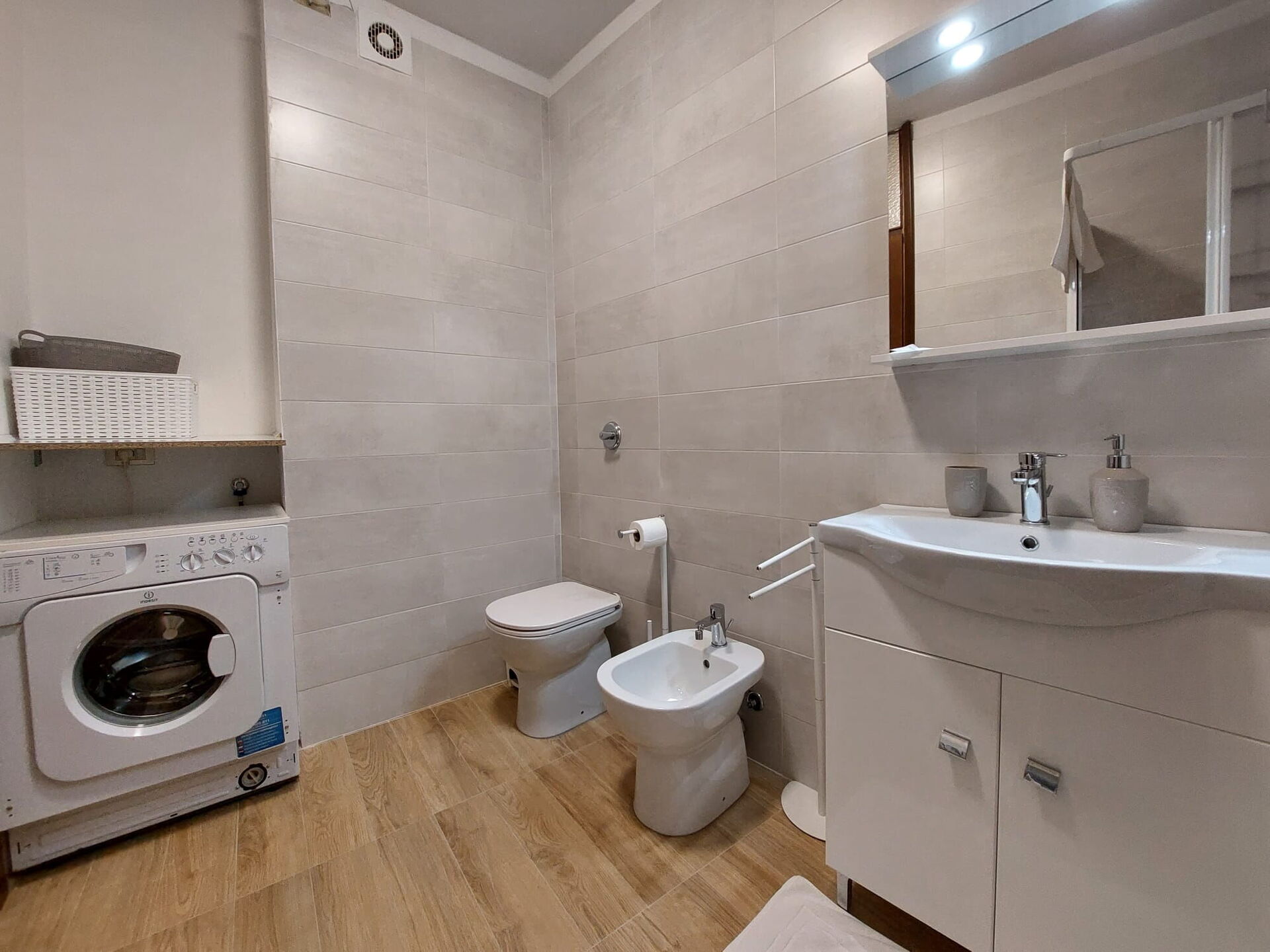
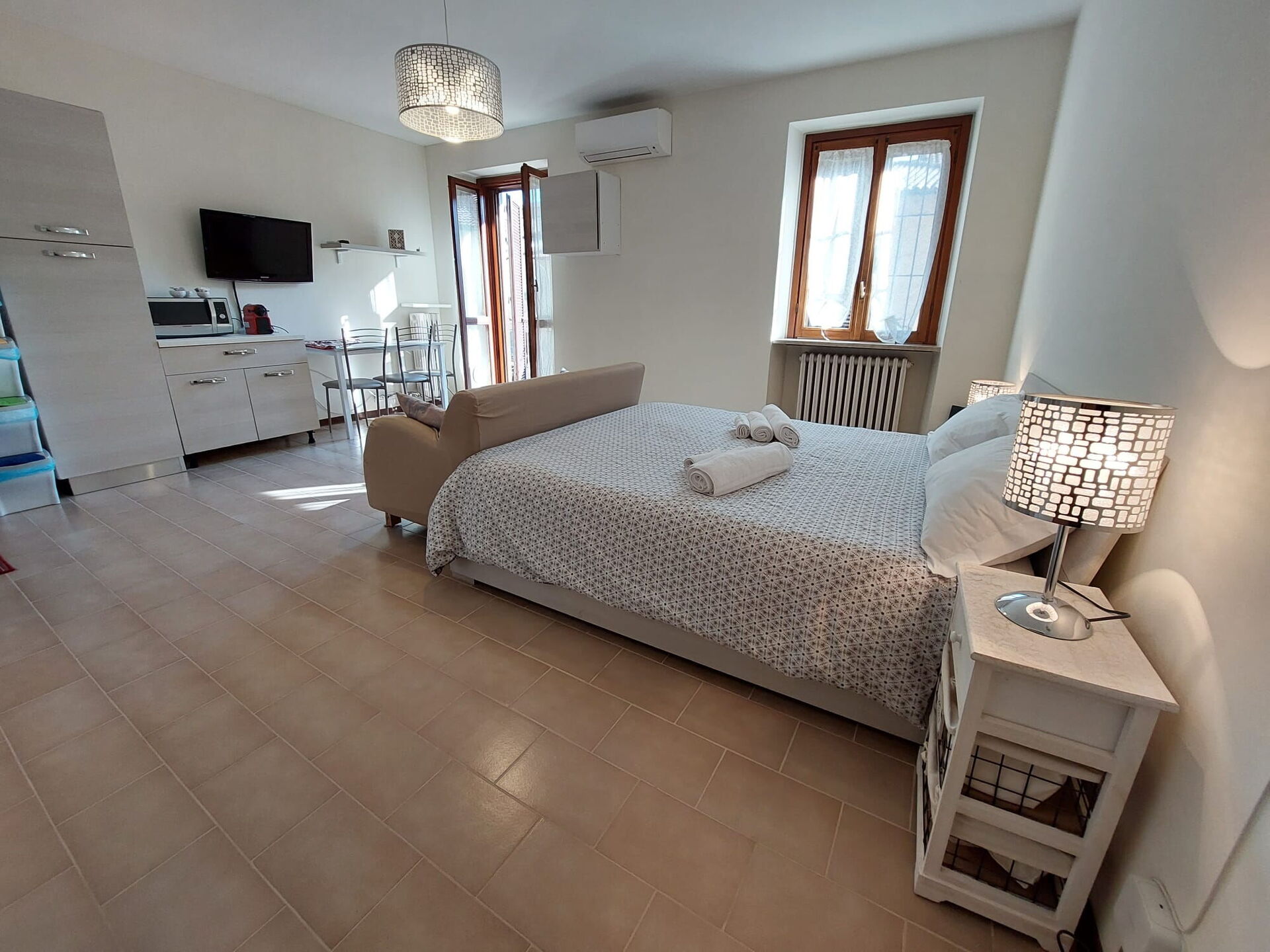
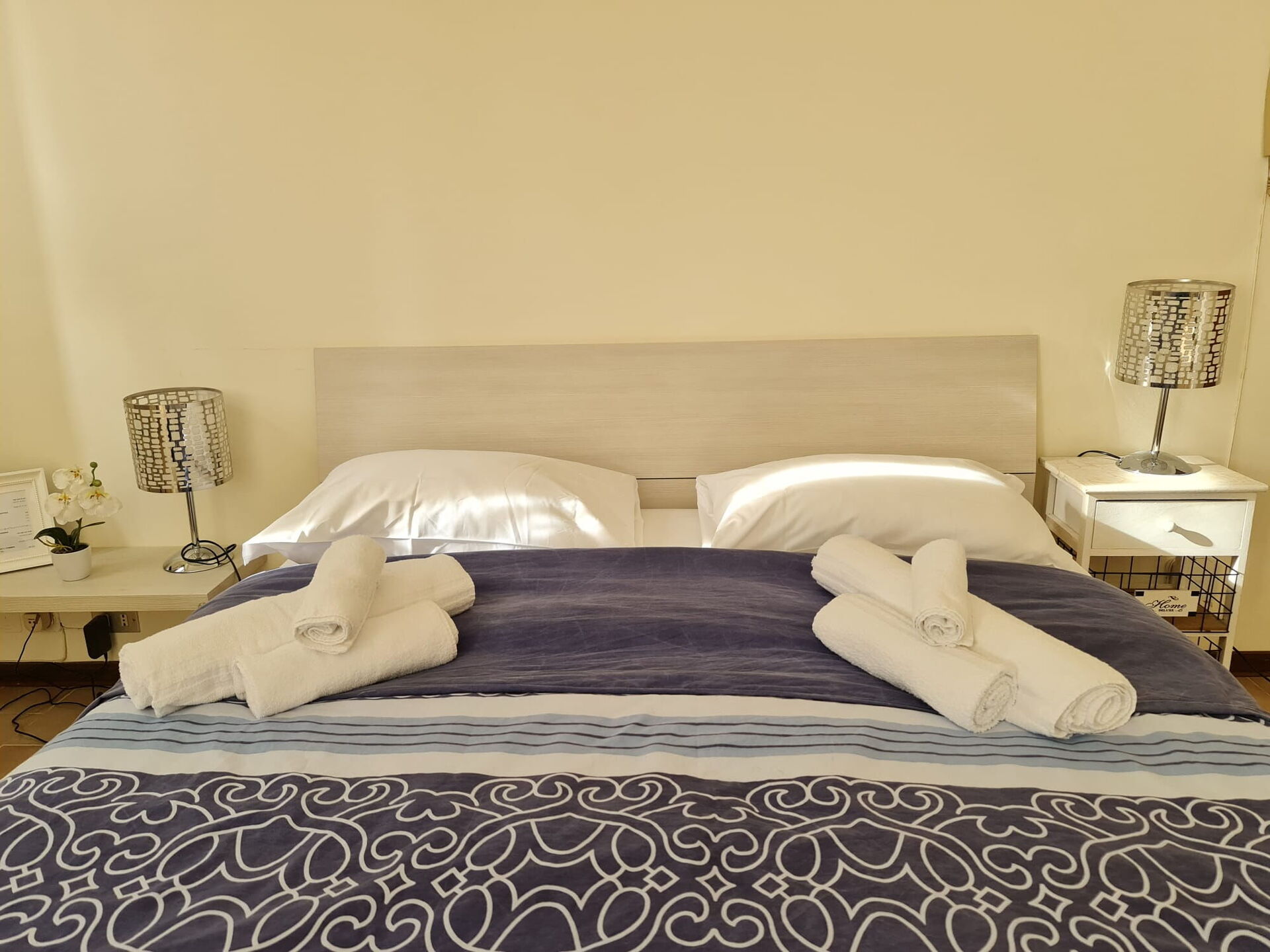
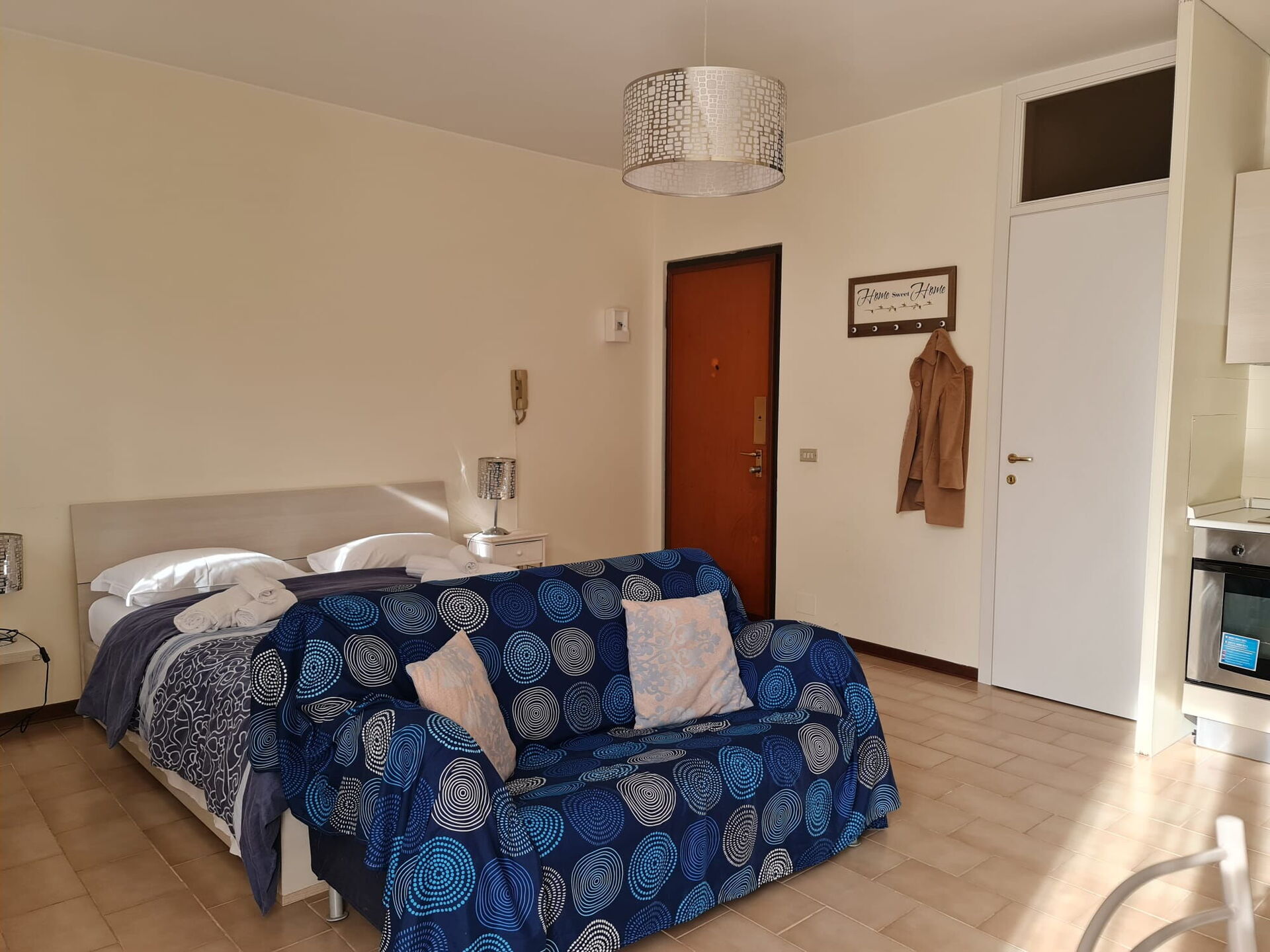
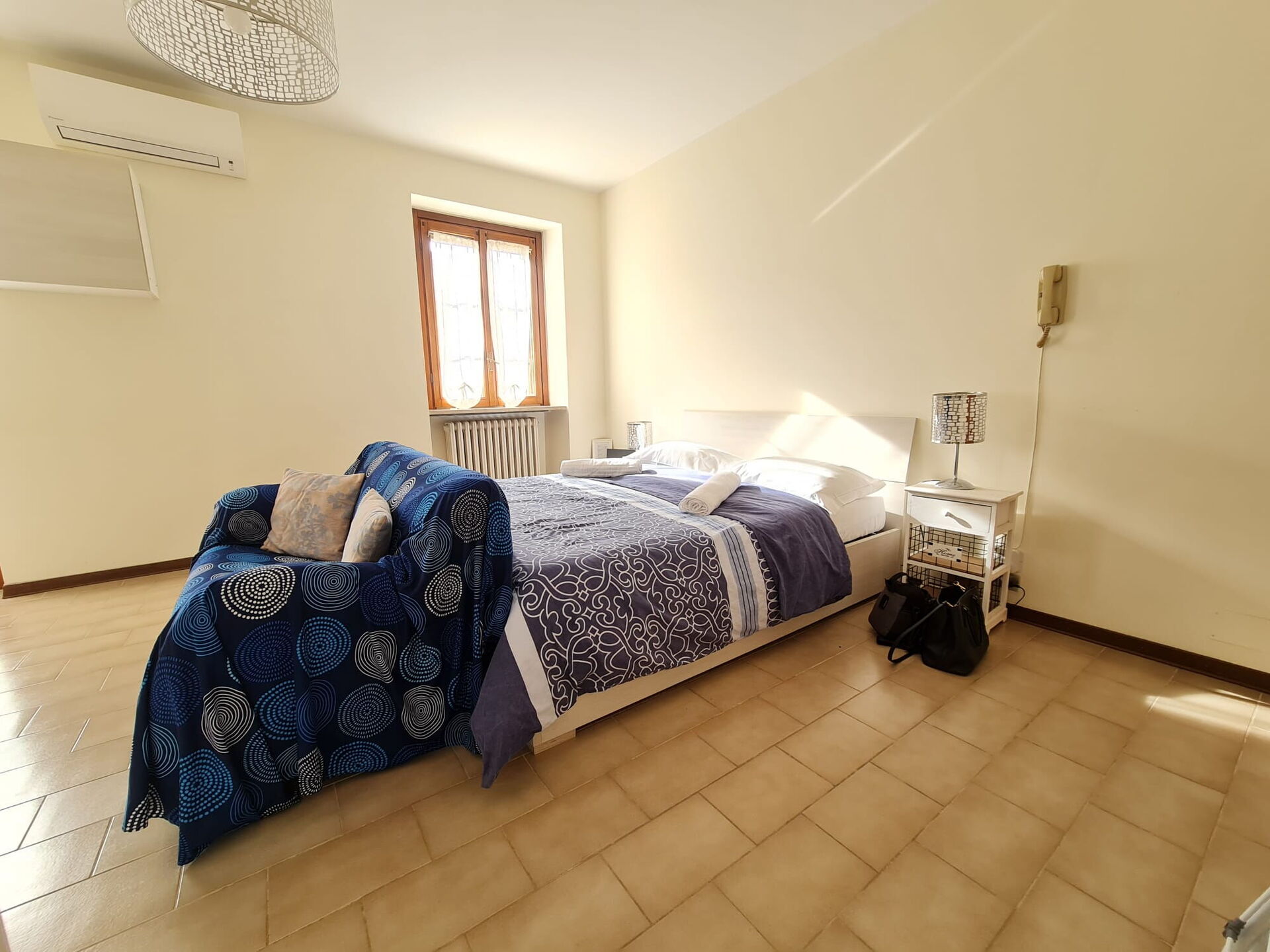
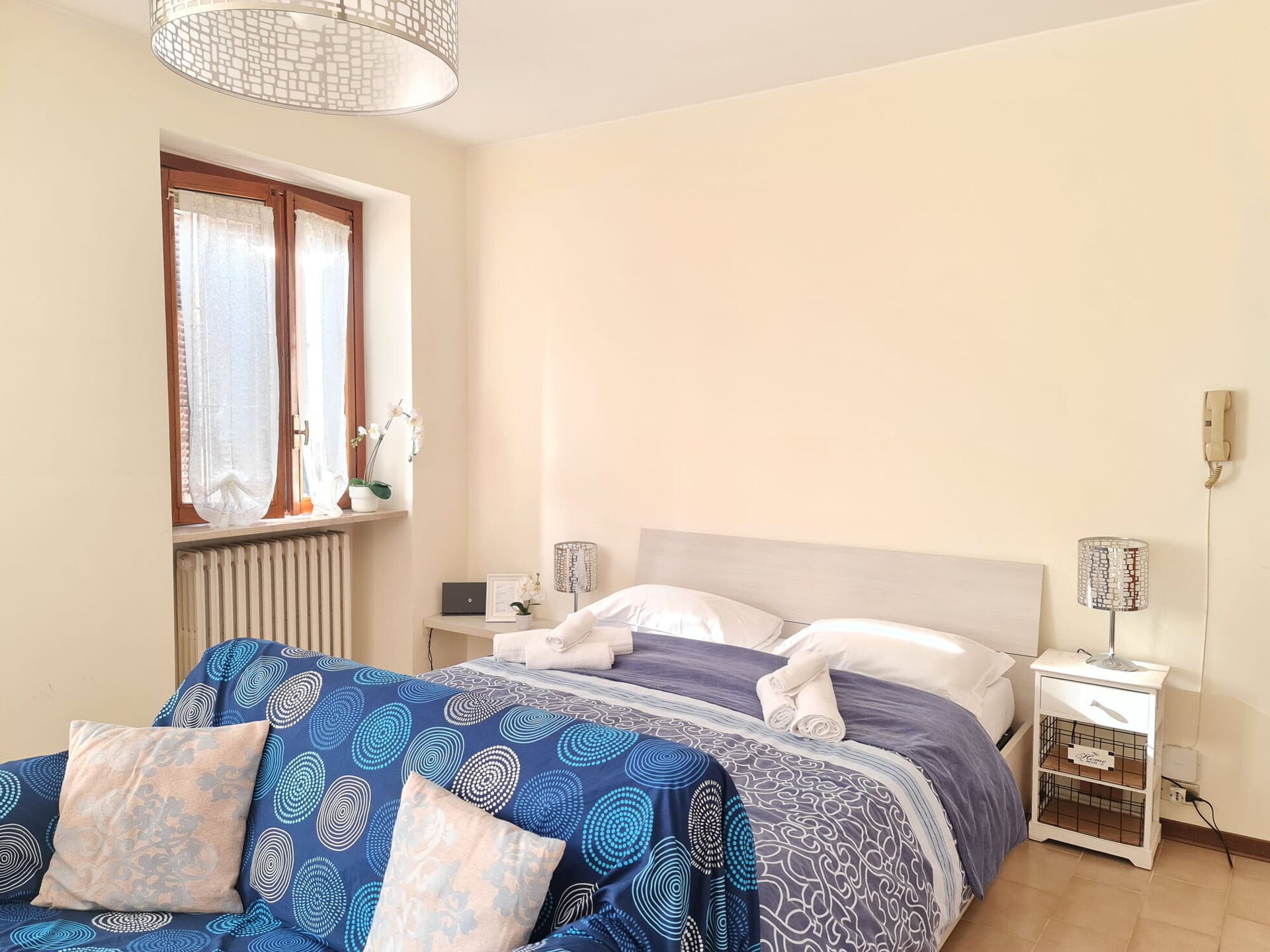
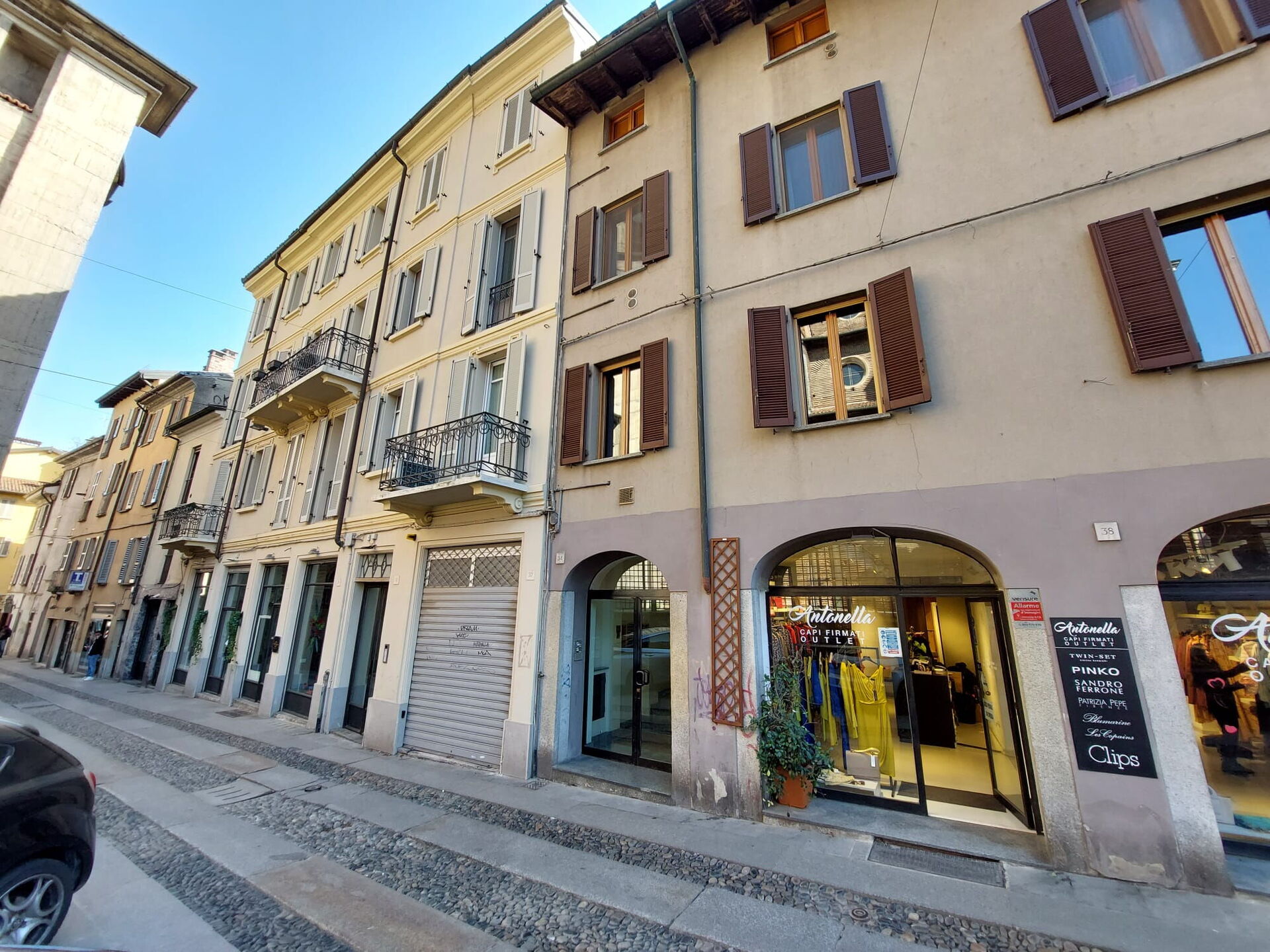
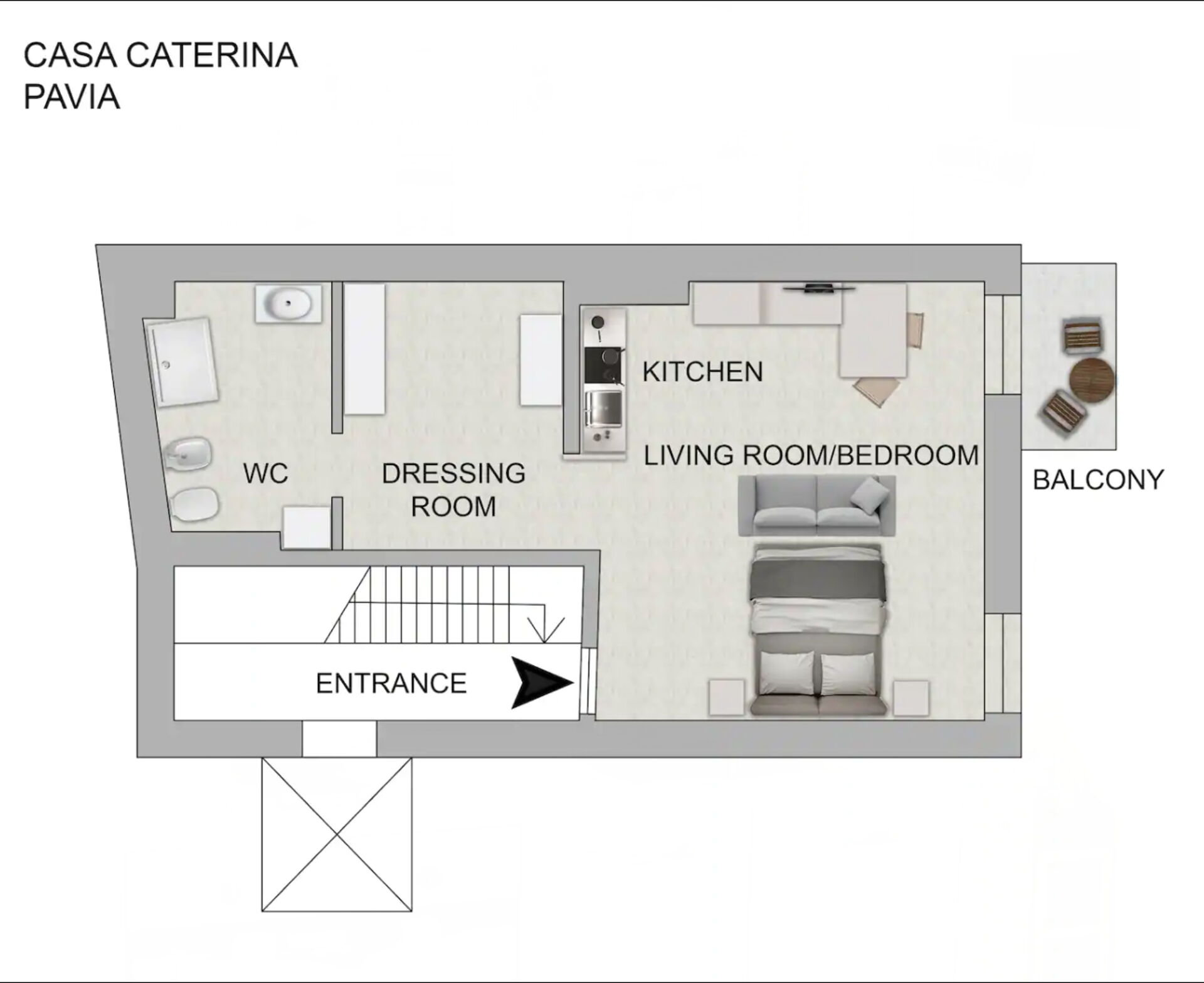
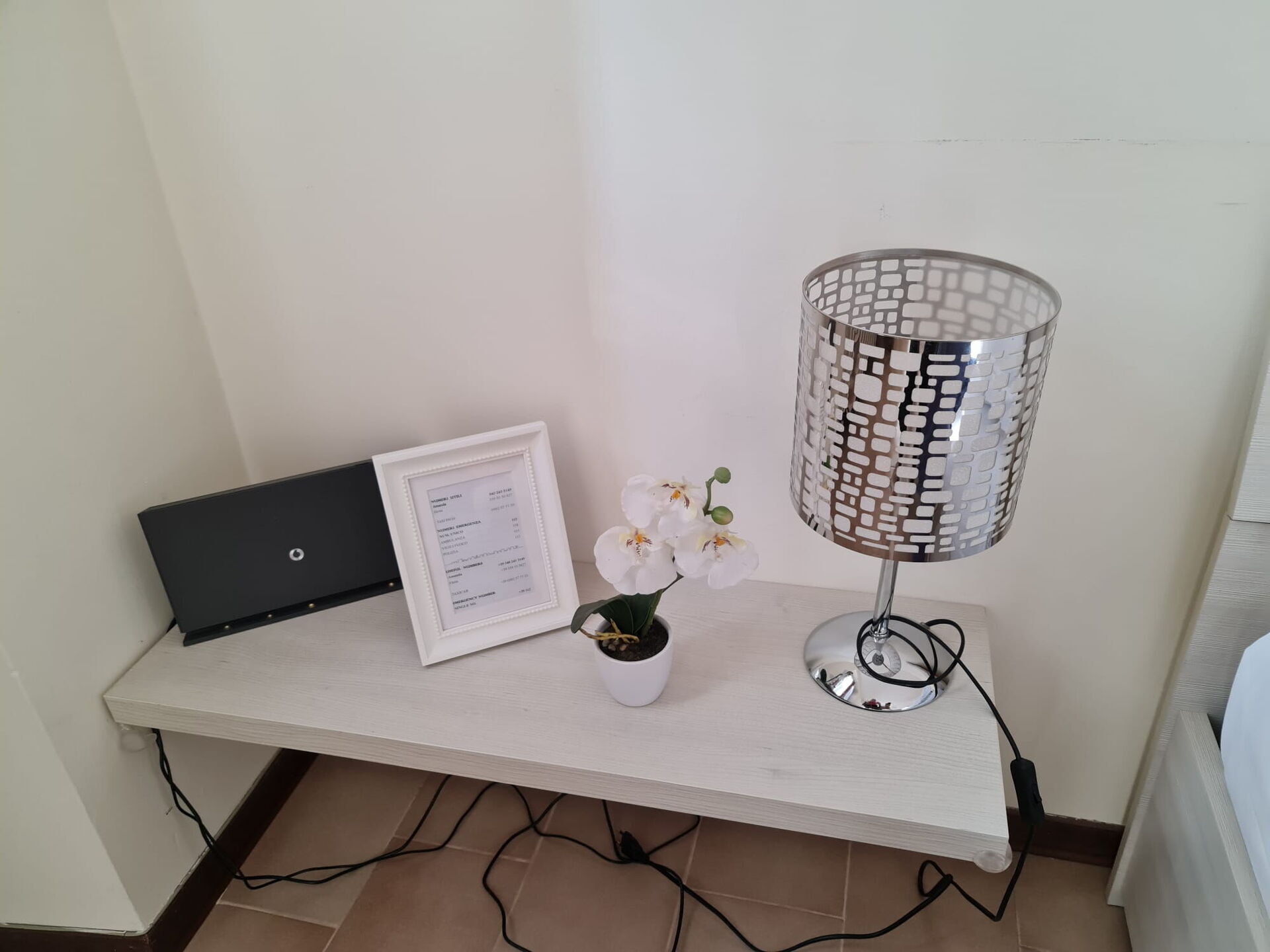
Vakantiewoning Casa Caterina is een mooie vakantieadres (35 m2) met WiFi internet en air conditioning. De woning is comfortabel geschikt voor max. twee personen in een slaapkamer en een badkamer. Gunstig gelegen in het centrum van Pavia (Italië) en slechts 43 km van Milaan. Vlakbij de accommodatie zijn er lokale winkels waar u verse producten en ander koopwaar kunt vinden.
Wat Staat U Te Wachten
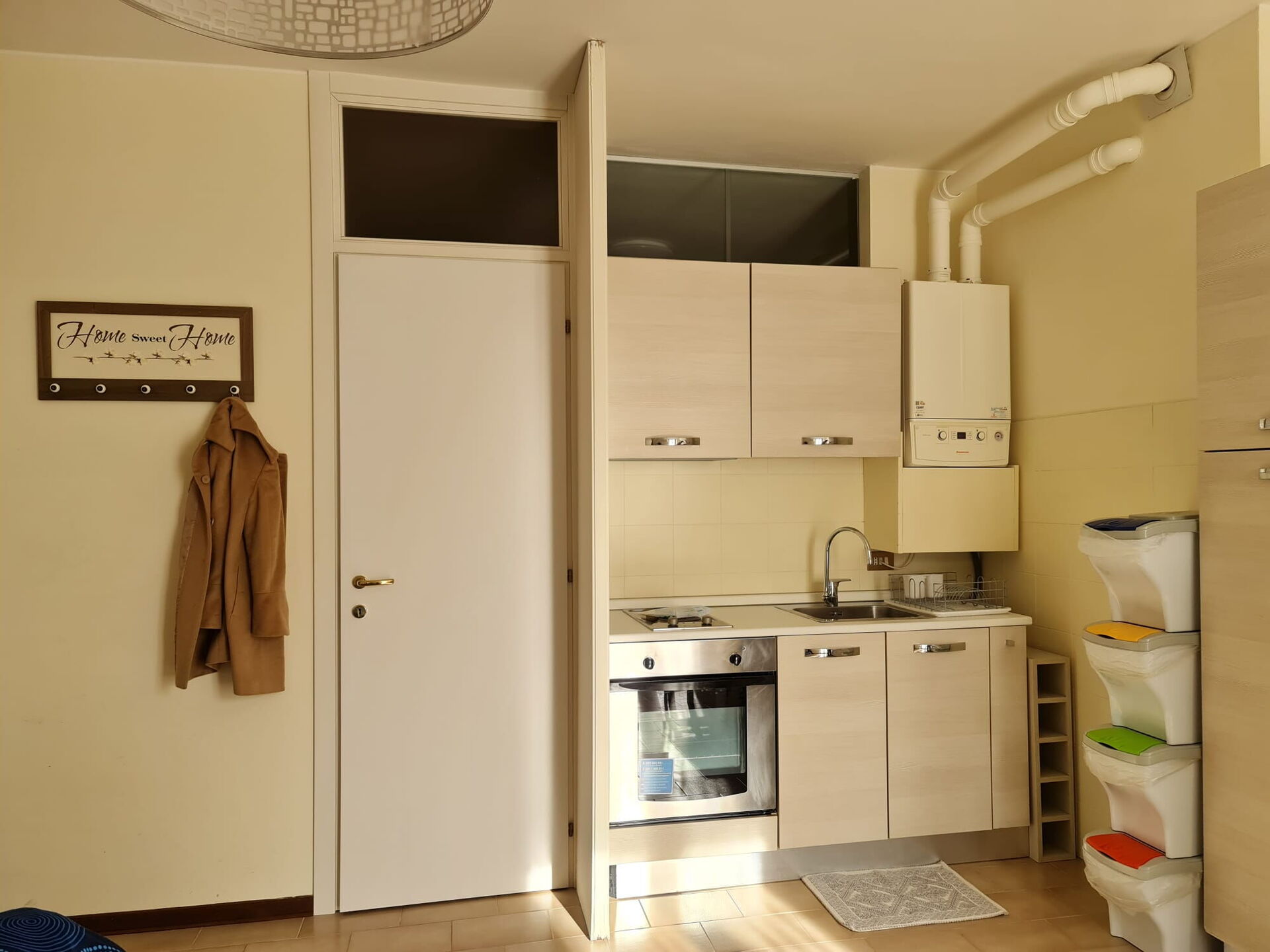
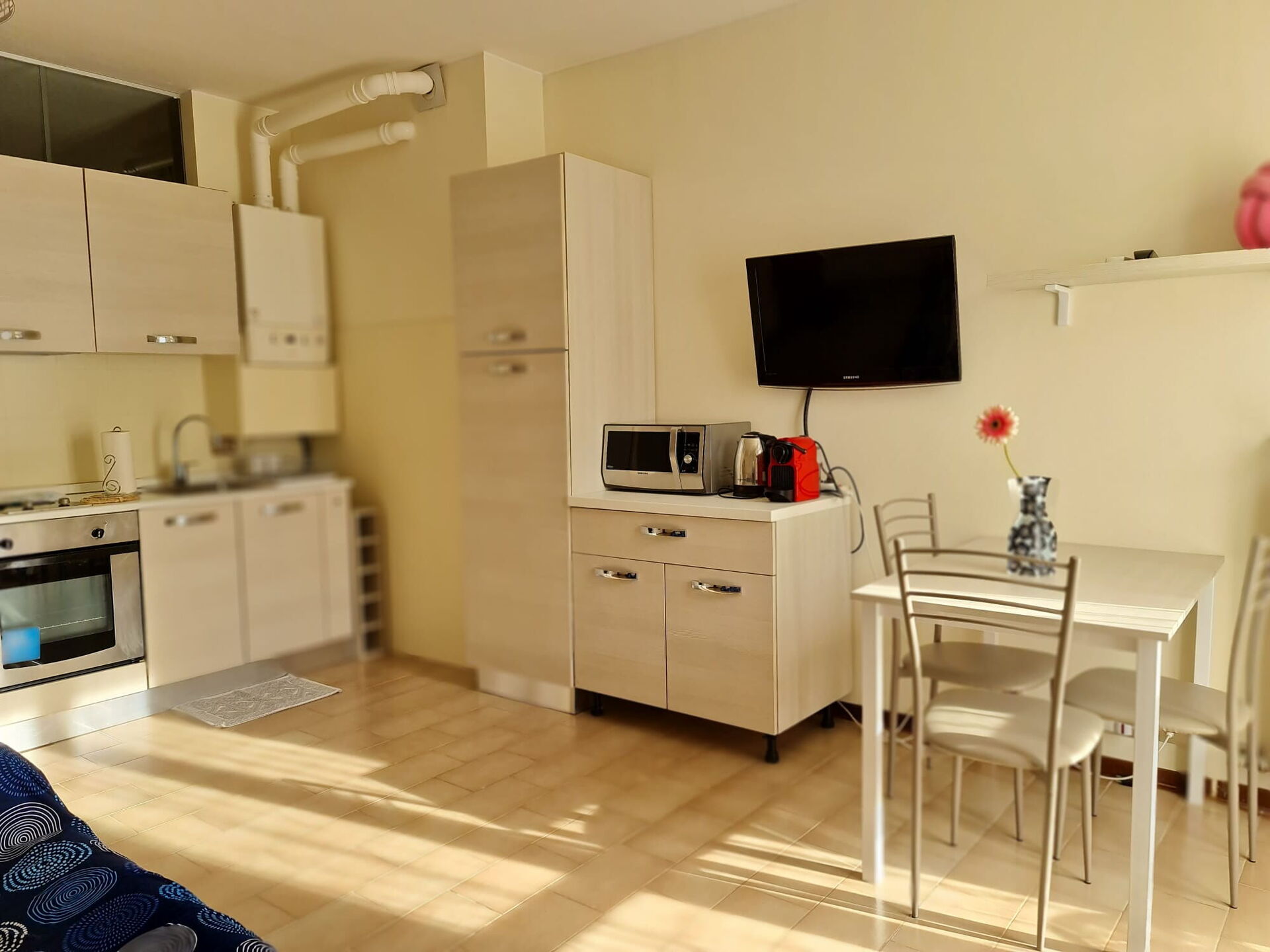
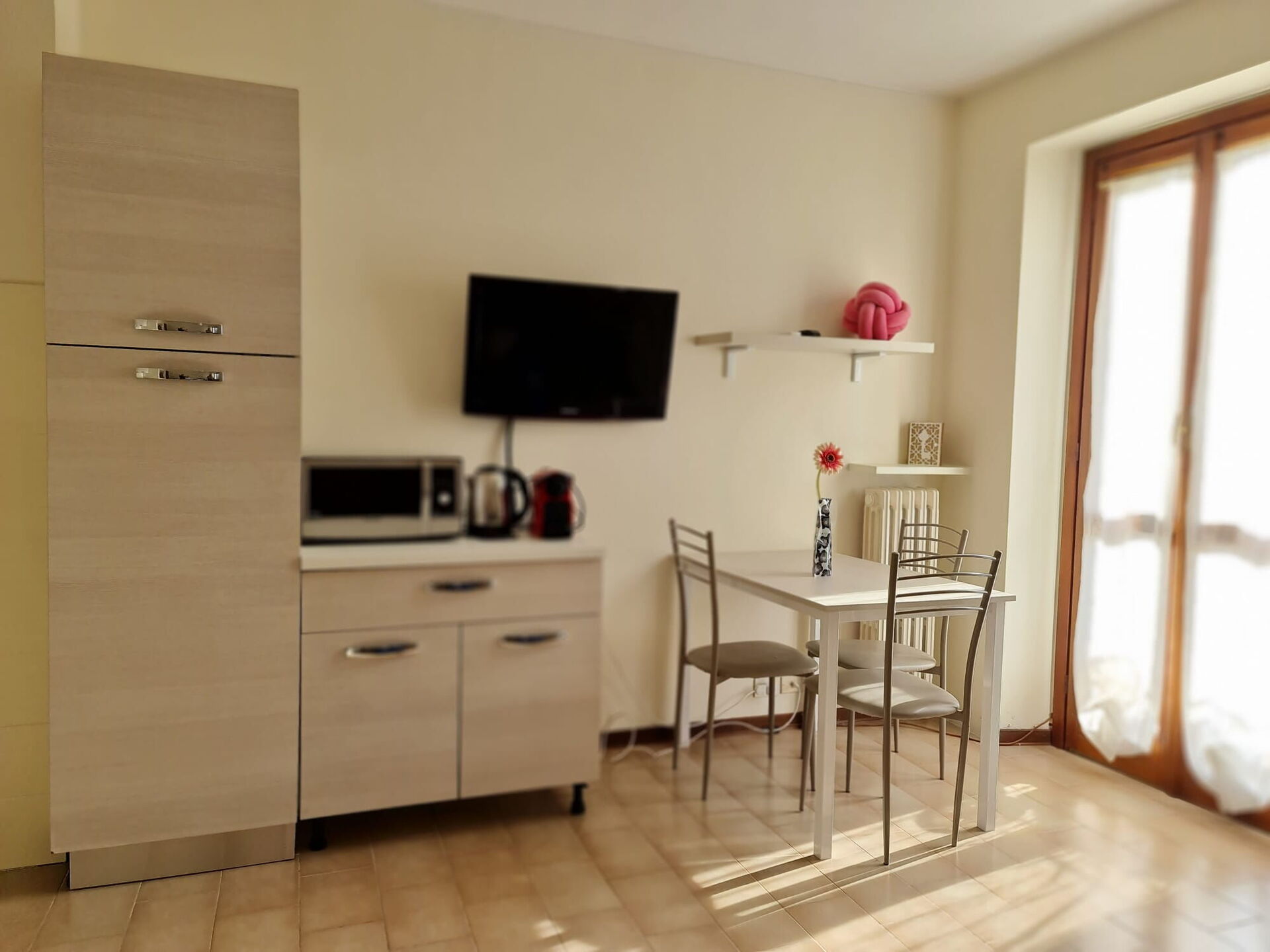
Bij aankomst vindt u een fraaie, schone en goed onderhouden woning met uitzicht over de stad ideaal voor een ontspannen vakantie in Lombardije. Na een drukke dag winkelen kunt u de tijd doorbrengen met vrienden en familie en genieten van een glaasje wijn - een perfecte manier om te ontspannen aan het einde van de dag. Als u van koken houdt is er een goed uitgeruste keuken met o.a. koffiezetapparaat, magnetron oven en ijskast en natuurlijk voldoende servies en bestek voor tot twee personen.
Wat is er te doen in de Omgeving
De meeste mensen houden ervan om dorpen en steden in de streek te bezichtigen terwijl ze op vakantie zijn, dus ter referentie een lijst van populaire plaatsen met de afstanden (hemelsbreed) vanaf de woning: Milaan 43 km, Monza 66 km, Como 87 km, Bergamo 98 km en Asti 108 km. De snelweg ligt op 11 km vanaf de accommodatie en er is een treinstation op 860 m.
Een aantal andere belangrijke toeristische bestemmingen zijn: Florence 291 km, Viareggio 251 km, Forte Dei Marmi 239 km, Rome 570 km, Venetië 313 km en Milaan 43 km.
Overige Informatie
Dichtstbijzijnde Luchthavens (afstanden hemelsbreed): Milano (Lin) 52 km, Milano Malpensa (Mxp) 86 km, Bergamo (Bgy) 99 km, Genova (Goa) 136 km en Torino (Trn) 180 km.
Beschrijving Interieur
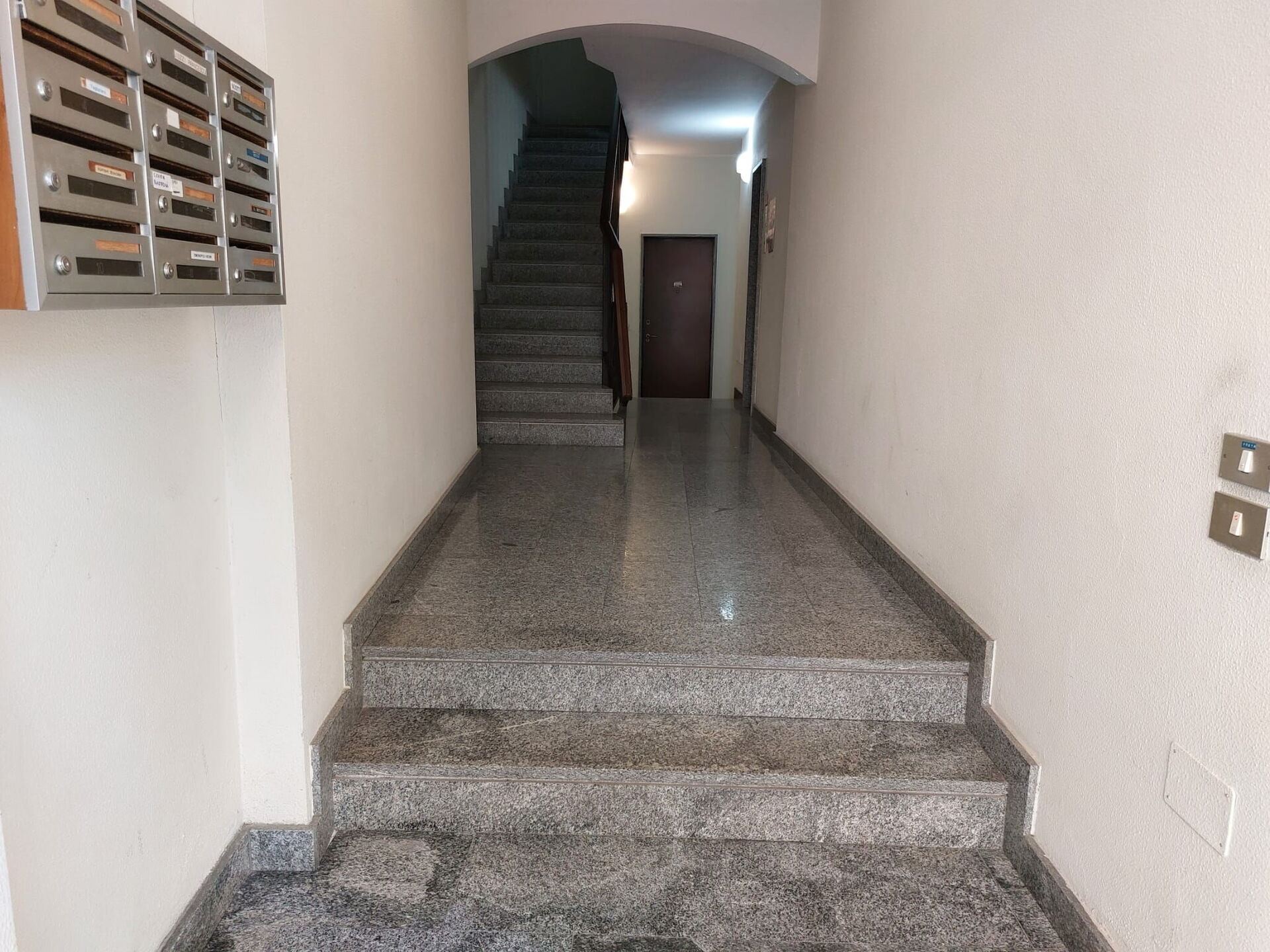
De hoofdingang van de woning is op verdieping 2.
Hoofdverdieping
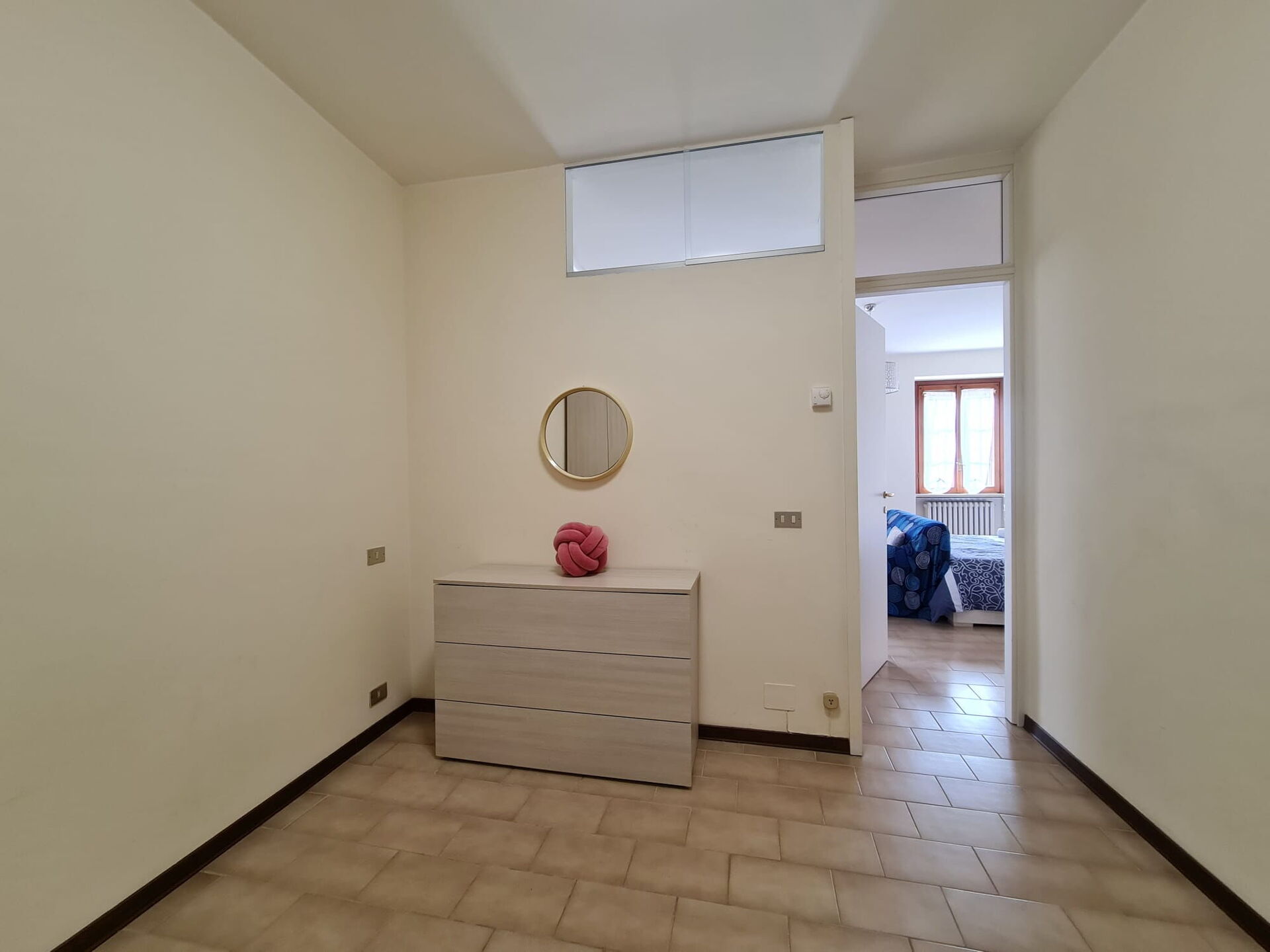
Met: badkamer, open ruimte.
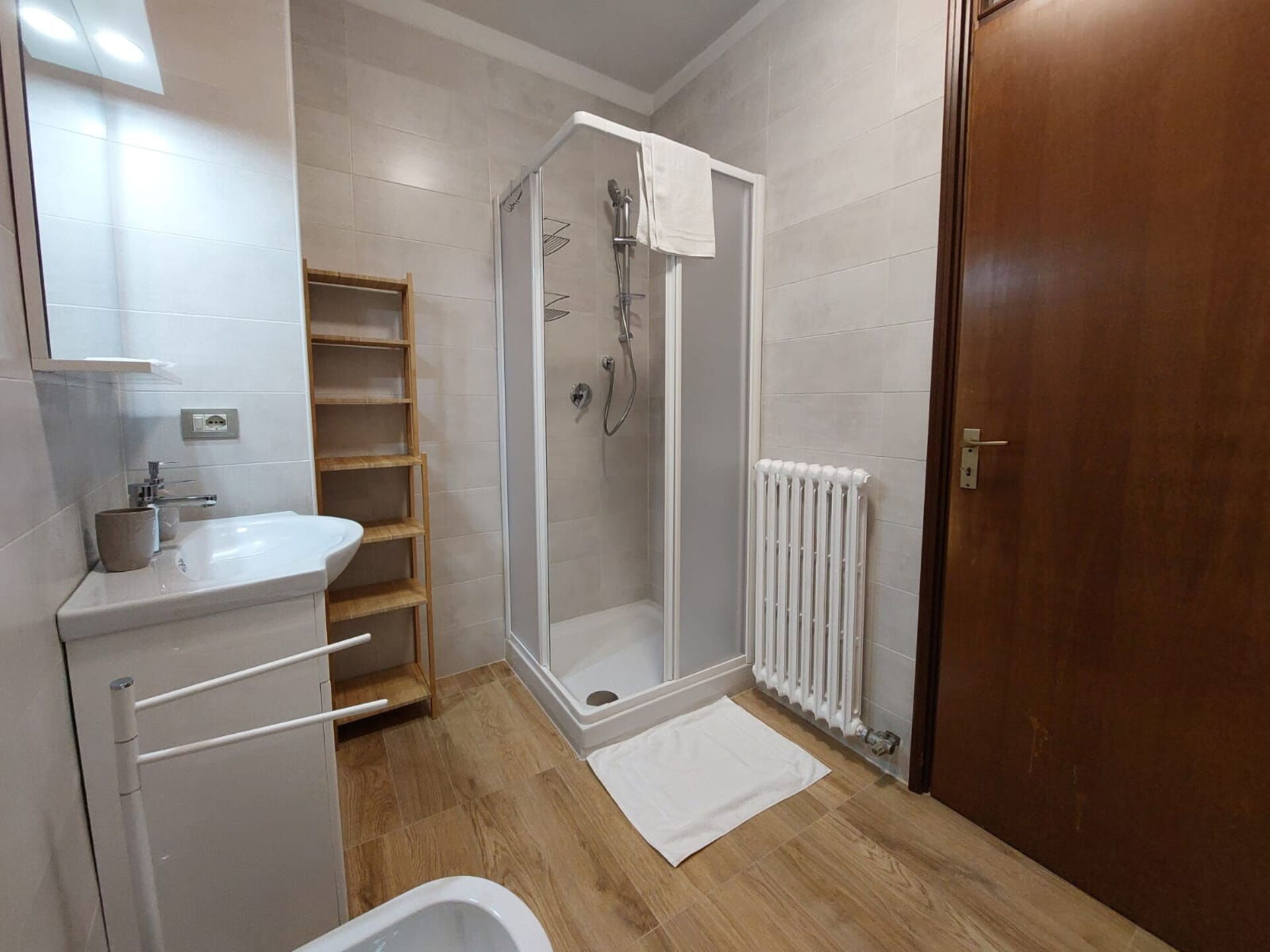
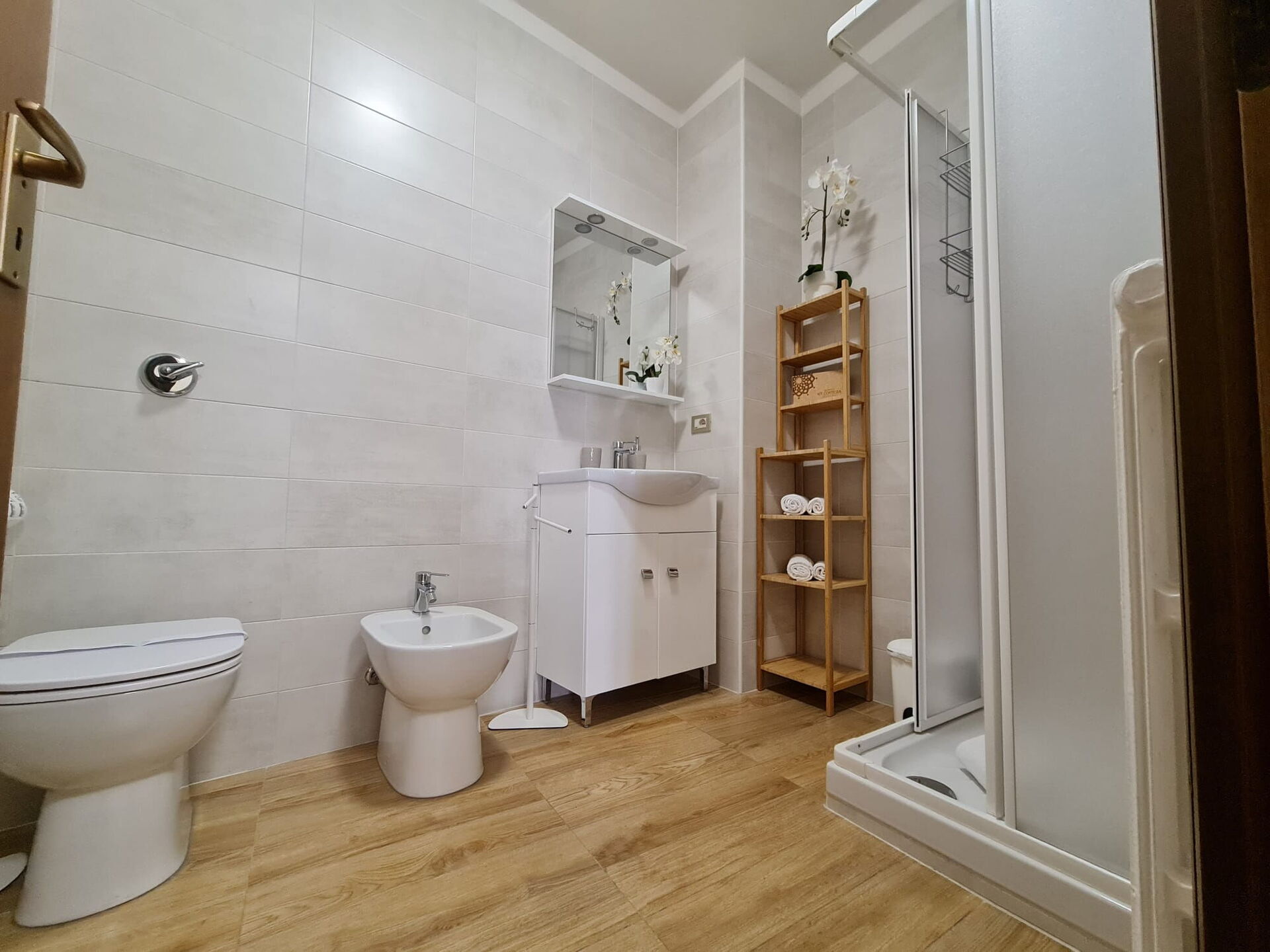
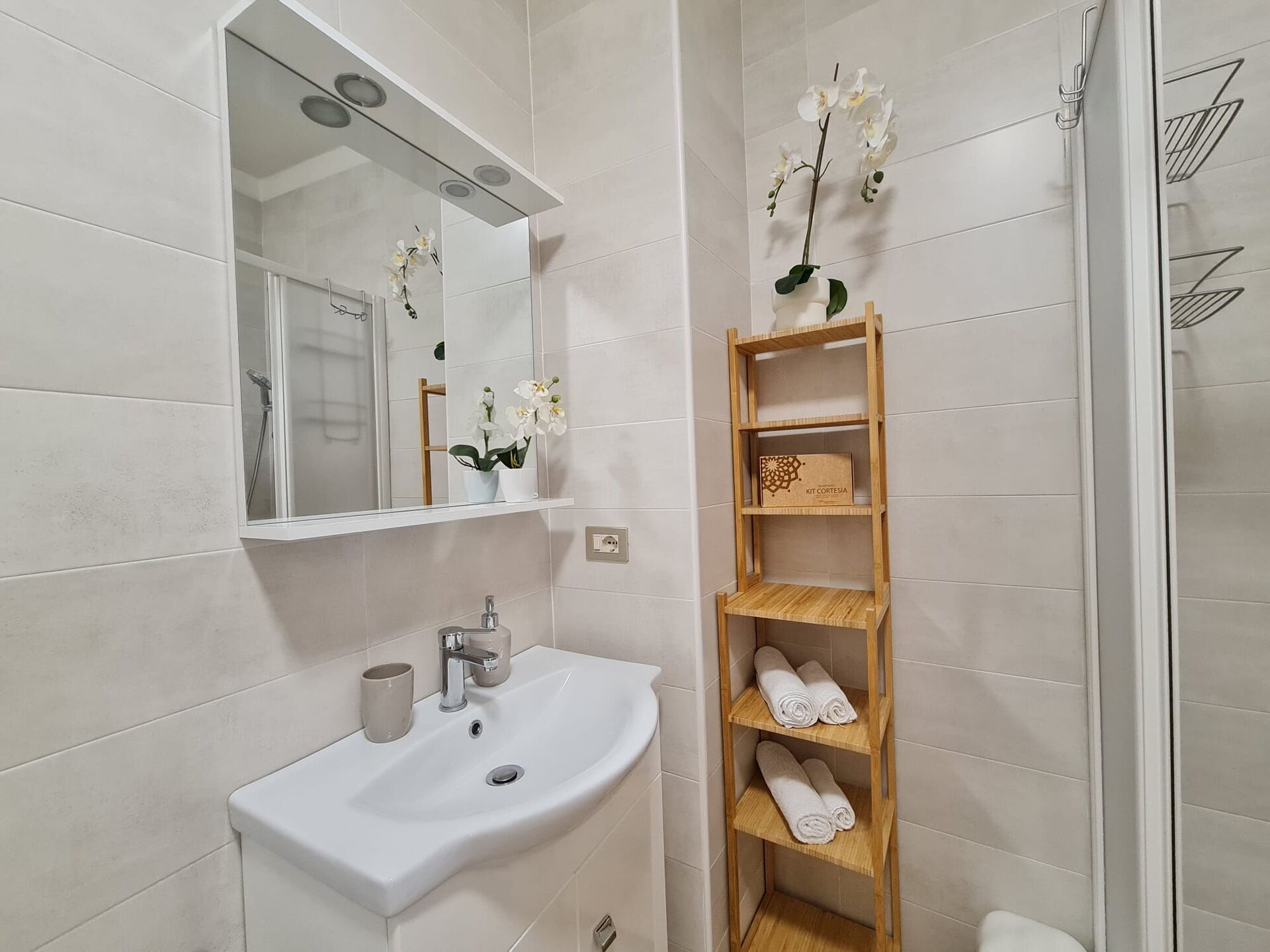
Badkamer: wastafel, toilet , bidet, douche, haardroger, wasmachine.
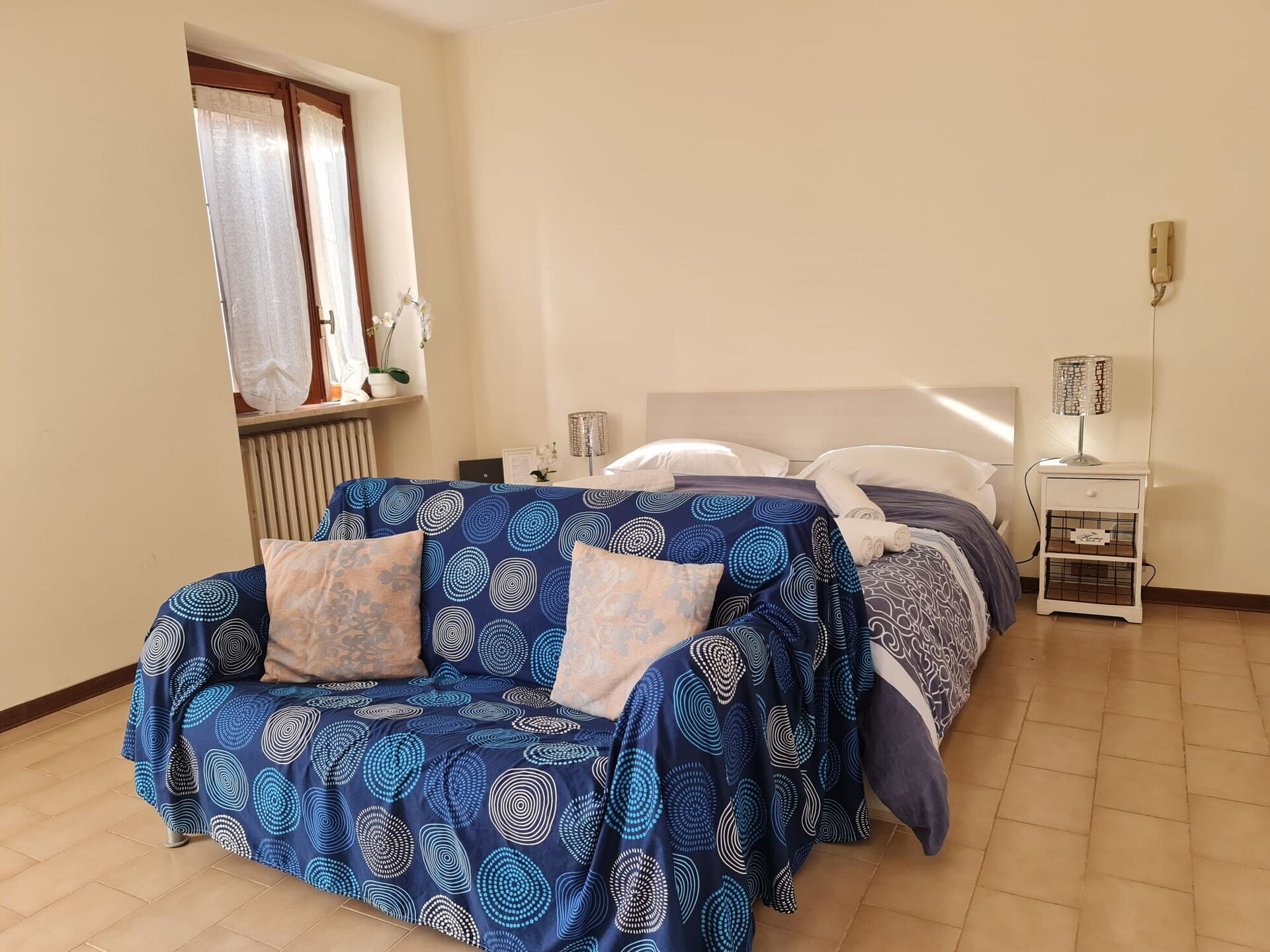
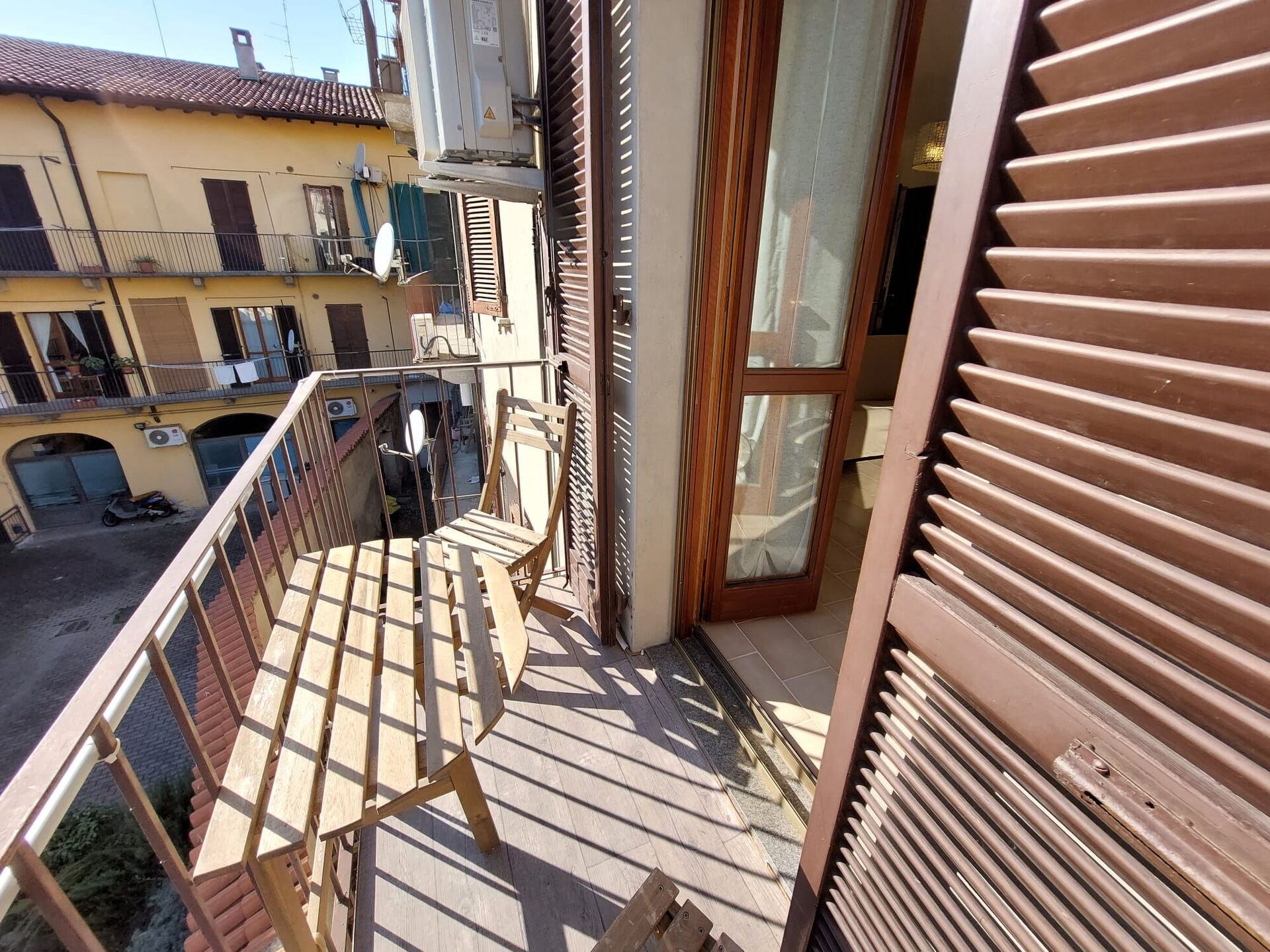
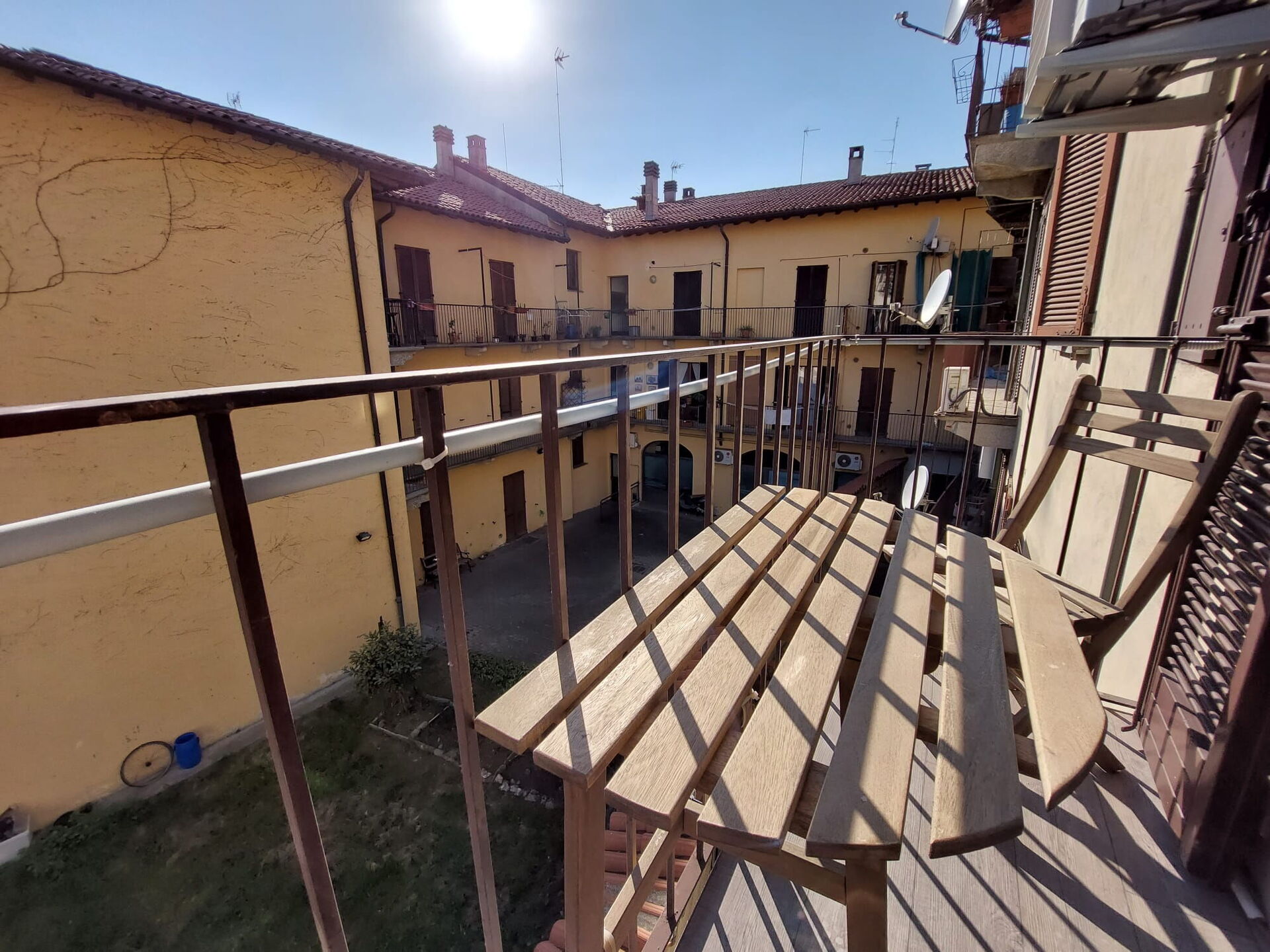
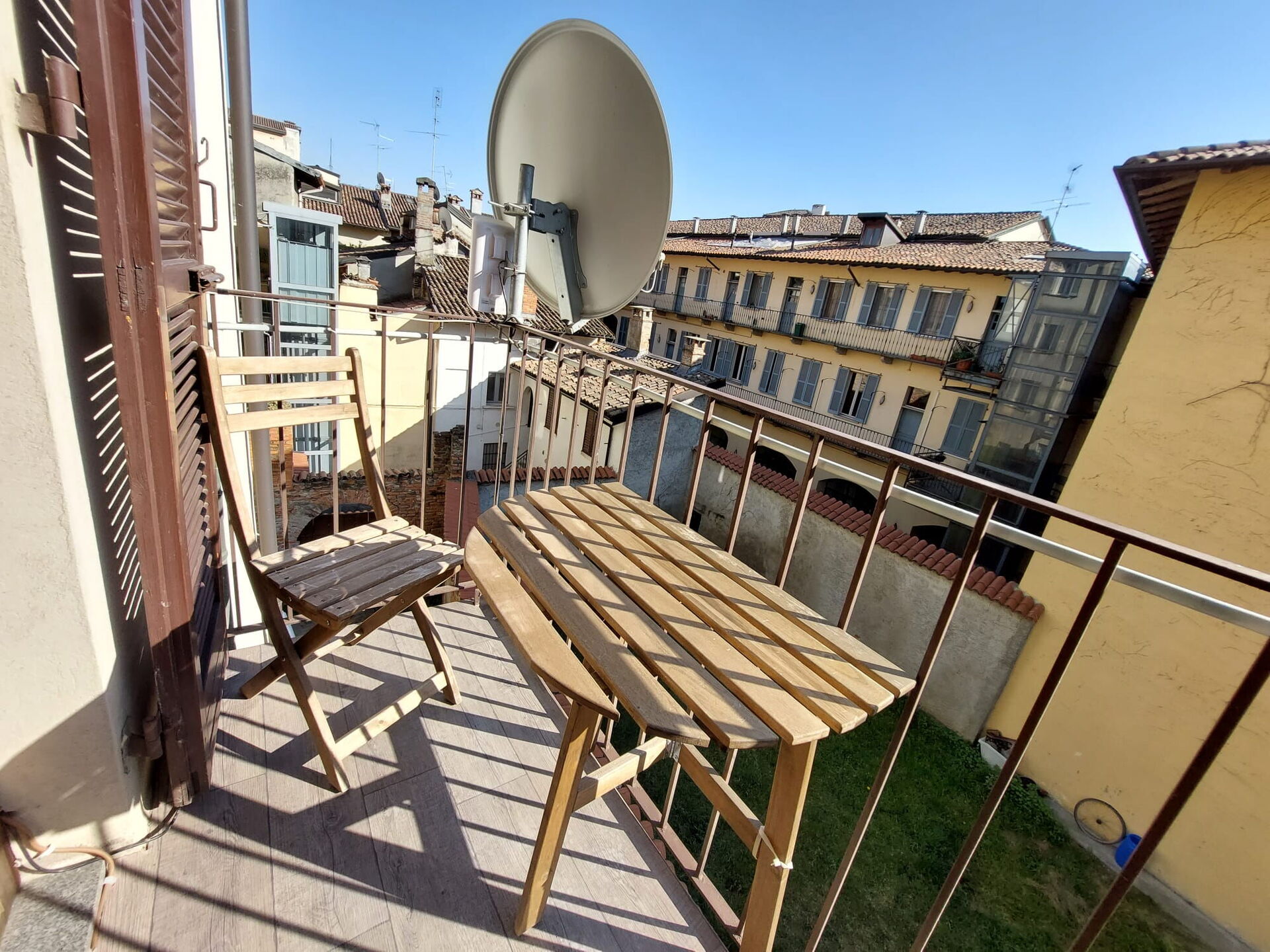
Open ruimte: bank, eettafel, tweepersoonsbed, WIFI internet, airconditioning, satelliet tv, tv, hor, ijskast, kookplaat, diepvriezer, goed uitgeruste keuken, magnetron, oven, italiaans koffiezetapparaat, uitgang naar het balkon.
Vergunnings- of registratienummer:
018110-LNI-00003
Ligging Pavia, Lombardije, Italië
Bezienswaardigheden
Klik op een Plaats van Interesse uit de lijst om ze op de kaart te bekijken
NP's in de omgeving van de woning(Afstanden hemelsbreed)
- Vliegvelden
- Milano (Lin), 52.3 Km
Toeristische Attracties
Ugo Foscolo and Alessandro Volta passed through the courtyards of his university. On the streets of Oltrepo ', Albert Einstein. Pavia is wisdom, pride and tradition.
In Pavia every place is a story. A Romanesque church houses the remains of St. Augustine. The Basilica saw the coronation of Frederick Barbarossa as King of Italy.
Memory and tradition have not trapped the city. Just stroll through the arcades and the courtyard of the Magnolias of the University founded in 1361 by Emperor Charles IV, one of the oldest in Italy, to breathe history, science and avant-garde together. It happens in the Teresian Hall of the Library, in the classrooms of Foscolo and Alessandro Volta, as well as inside the Historical Museum and the Botanical Garden, with the orchid greenhouse and a large secular plane tree.
In the city, you are happy to discover the Civic Museums inside the Visconti Castle, and the Ponte della Libertà, to be observed at night when the arches are colored in blue, yellow and fuchsia by the neon lights of the artist Marco Lodola. The 14th century Gothic Ark where Saint Augustine rests is kept in San Pietro in Ciel d’Oro. The Barbarossa was instead crowned inside the Basilica of San Michele Maggiore.
Another pearl not to be missed is the Church of San Teodoro built in the second half of the 12th century to house the remains of San Teodoro, the ancient bishop of Pavia and patron saint of fishermen, boatmen and traders who lived in this area of the city.
Inside there is the beautiful fresco by Bernardino Lanzani of 1525 depicting a very detailed view of Pavia still bristling with dozens of high medieval towers, in which the castle, the bridge, the Regisole and many churches that still exist today are easily recognized.
The Basilica of San Michele, a masterpiece of Lombard Romanesque architecture, the basilica has a grandiose three-nave plan, surmounted by the lantern, and is decorated with a rich decorative apparatus of which the sculptures of the facade, the reliefs and the zoomorphic bands are examples. , the frames with spirals and vegetable shoots.
The current building was built on the previous Lombard church and served as the seat of the royal coronation ceremonies: Frederick Barbarossa was crowned here in 1155.
The interior is adorned with sculpted capitals with stories from the Bible and allegorical figures and has a very suggestive crypt.
On the presbytery it houses the floor mosaic depicting the "Months" and the "Labyrinth" and, in the transept, the crucifix called Theodote, a masterpiece in silver foil by a master goldsmith active in northern Italy in the second half of the 10th century.
If you still don't know if it's worth leaving, here are 10 good reasons to visit Pavia and Oltrepò:
1. Einstein lived here
Did you know that even Einstein stayed in Pavia? In 1894 his parents moved to the city to Palazzo Cornazzani - former home of Ugo Foscolo - and the scientist spent a few months there taking walks in the Oltrepò and cycling along the Ticino.
2. It is the city of knowledge
Not everyone knows that Pavia boasts one of the oldest universities in Europe. To learn about its history, visit its museums: the Natural History Museum, the Museum of Electrical Engineering, the Museum of Mineralogy, the Botanical Garden and the Museum for the History of the University. The latter houses the Sala Scarpa dedicated to the famous anatomist doctor, the Sala Porta with finds and experimental preparations made by the surgeon in the nineteenth century, the Sala Golgi, dedicated to the Nobel laureate Camillo Golgi, the Sala Volta, reserved for the inventor of the battery and the 19th century physics cabinet.
3. Its churches are unparalleled
There is the fifteenth-century Cathedral with the relics of the Holy Thorns of Christ, the remains of San Siro, protector of Pavia, and the rich paintings by Carlo Sacchi. But there is also the Church of San Pietro in Ciel d'Oro, known because it houses the remains of Severino Boethius, King Liutprando and Sant'Agostino, doctor of the Church: its ark is one of the most beautiful monuments of the fourteenth century Gothic . Also not to be missed is San Michele Maggiore, dating back to 1118, and the church of Santa Maria in Betlem, in the Ticino village, also known as the “house of Santa Maria della Stella”.
4. His shoes are museum-quality
Just visit Vigevano to discover the International Footwear Museum, which exhibits both ancient models and those that have made the history of more recent fashion. From the Pianella by Beatrice d’Este to the creations of Manolo Blahnik, a space not only for lovers of heel 12, but for all those who want to deepen the evolution of the costume and craftsmanship of Vigevano.
5. It's a land ... sparkling
We explore the Oltrepò Pavese to find the most renowned wineries. Because yes, Pavia too is a land with an ancient wine vocation and here you can taste various nectars: from reds to sparkling rosés, from Bonarda to Barbera to fragrant Riesling, from Moscato to Malvasia, from Cabernet to Pinot Noir, for a total of 36 different titypes, all DOC.
6. It has some of the most beautiful villages in Italy
Not just excellent wines. In the Oltrepò there are some of the most beautiful villages in Italy: Fortunago, Zavattarello and Porana. All three guarantee suggestive atmospheres, monuments rich in history and excellent typical dishes. Varzi is also worth a visit, where a delicious DOP salami is produced.
7. We walk indoors
The covered bridge of Pavia, which spans the Ticino river, is one of the symbols of the city. What we see today is the reconstruction of the ancient fourteenth-century bridge, seriously damaged during the bombing of the Second World War, so much so that the old pillars are still visible in the river. Open to both car traffic and pedestrians, it has a plaque dedicated to the 50th anniversary of the death of Albert Einstein, which bears a sentence written by the scientist in one of his letters: "Die schöne Brücke in Pavia habe ich oft gedacht" (" I have often thought of that beautiful bridge of Pavia ").
8. His theater is a little gem
It is thanks to the commitment of four nobles from Pavia, Count Francesco Gambarana, Marquis Luigi Bellingeri Provera, Marquis Pio Bellisomi and Count Giuseppe Giorgi di Vistarino, if Pavia today can boast a splendid theater. The works began in 1771 and ended in 1773, showing everyone a masterpiece: the Fraschini theater, designed by Antonio Galli Bibiena. With its typical horseshoe shape, it is embellished with a series of boxes and a fully painted wooden ceiling. Artists such as Renzo Ricci, Cesco Baseggio, Vittorio Gassman and Dario Fo, have trod his stage.
9. It is the capital of rice
With about 80 thousand hectares entirely dedicated to rice fields, Pavia is the Italian capital of rice. The plain that extends between Lomellina and Pavese looks like a large mirror that reflects the sky and the landscapes: fascinating, dotted with farmhouses, rich in tradition and history, this land will conquer you not only by taking you by the throat.
10. The Certosa of Pavia
Immersed in the countryside around Pavia, a few kilometers from the city center, you will find one of the greatest Italian Renaissance masterpieces in front of your eyes: the Certosa di Pavia.
The monastery was built by Gian Galeazzo Visconti as a family chapel, connected to the castle through the Visconteo Park. Construction began on 27 August 1396 and it was Gian Galeazzo himself who laid the first stone.
The church was covered at the behest of Francesco Sforza in 1462, while the large cloister, consisting of brick arches supported by marble columns, was finished in 1472. The facade of the Certosa is decorated with a series of medallions depicting characters - historians or legendary - from antiquity.
Higher up are represented scenes from the life of Christ and the Old Testament and figures of Saints and Prophets. Upon entering the church, you will notice the original Gothic structure, inspired by the Milan Cathedral, its three naves are covered with cross vaults decorated with starry skies and figures of Saints and Carthusians. The frescoes dedicated to the Sforza and Visconti families are found in the left transept.
The Certosa di Pavia opened its museum to the public for the first time in 1911. On the ground floor of the Certosa Museum there are about 200 plaster casts of the reliefs of the façade, cloisters and other parts of the monastery. On the first floor there are vestments, sculptures, altarpieces, panel paintings, marble high-reliefs and portraits of the Visconti and Sforza families.
Openbaar Vervoer
Pavia Railway Station 1 km, about 12 minutes on foot
Bus stop 400 mt
Milan Malpensa Airport 80 km
Milan Linate Airport 50 km
Orio Al Serio Airport 100 km
Parkeerplaats
private parking not available
possibility of free and paid public parking in the neighboring streets subject to availability
Lees Meer over de Omgeving van Pavia
Pavia is een verouderd stadje in
Lombardije dat meer dan 2000 jaar oud is, niet ver van Milaan gelegen en sprookjes oproept, met name die van Rapunzel. Er zijn talloze middeleeuwse torens die naar de hemel reiken en neerkijken op moderne gebouwen.
Deze dunne, op het eerste gezicht doelloze torens, overheersden ooit het stadje met hun grote aantal. Vandaag de dag zijn het er nog slechts een paar, maar toch staat het stadje nog bekend als de "stad met 100 torens".
Ondanks het geringe aantal torens van vandaag de dag, zijn er toch nog genoeg dingen om te zien en te doen in de stadje. Dus maak een keuze uit onze
vakantiewoningen in Lombardije en breng een bezoek aan het prachtige Pavia!
De Brera kunstgalerie, ook wel bekend onder de naam Pinacoteca di Brera is de bekendste toegankelijke kunstgalerie van Milaan. Hier vinden we uitstekende collecties kunstwerken die in de laatste zes eeuwen werden verzameld, en die uitstekend de vooruitgang in kunsttechnieken demonstreren; van een geraffineerde Neoklassieke stijl tot aan Avant Garde en het Modernisme.
Bewonder enkele fantastische kunstwerken van beroemde artiesten als Rubens, Titian, Correggio en Anthony van Dyck. Kies uit een geweldige reeks van of
vakantiewoningen in Milaan, en maak een toer van de bezienswaardigheden van deze prachtige stad!
Gelegen in de Pavia provincie in
Lombardije is het leuke stadje Vigevano. Dit oude, artistieke plaatsje staat bekend om de ambachten en landbouw. De twee grootste economieën zijn schoenmaken en rijst. Bekijk enkele fantastische
vakantiehuizen met reviews in Lombardije, boek een verblijf en ga zelf op ontdekking uit in Vigevano!
Begin deze toer van Vigevano op het fantastische
Piazza Ducale, een Renaissance plein ontworpen door Bramante in het stadscentrum.
Het Piazza Ducale staat bekend als een van de mooiste piazzas van Italië. Het heeft een vierhoekige vorm en werd oorspronkelijk gebouwd om te fungeren als nobel voorplein voor het Castello Sforzesco. Bekijk de fraaie, oude kathedraal die het Piazza Ducale aan een kant versierd. De kerk is gebouwd in een decoratieve stijl uit de Barok. Binnen hangen en staan enkele uitmuntende kunstwerken die de moeite van een bezoek waard zijn.
Omgeef uzelf met operamuziek in het thuisland van deze kunstvorm, Italië! Al vier eeuwen lang bloeit de operamuziek hier, al was de oorsprong niet helemaal bekend.
In het Florence van de 16e eeuw blies een groep genaamd de Camerata,bestaande uit geleerden, dichters en componisten, nieuw leven in de oude tradities van het Griekse drama.
Verblijf in een
vakantiewoning in Florence, en kom meer te weten over de revolutionaire Camerata, en bezoek een aantal opera's tijdens uw verblijf in de stad!
Gaat u genieten van een zonnige vakantie in de buurt van het Noord-Italiaanse Milaan, dan bent u in de gelegenheid om de beroemde Santa Maria delle Grazie kerk en het klooster te bezoeken, waar het originele fresco van ‘
Het Laatste Avondmaal’ door Leonardo da Vinci op de muur werd geschilderd!
U kunt verblijven in één van de vele exclusieve
vakantiehuizen in Milaan van waaruit uw toer van Milaan kan beginnen.
In 1463 werd begonnen met de bouw, en het werd afgemaakt door één van de beste architecten en schilders uit de Renaissance. Donato Bramante was één van de eerste architecten die aan de St. Pieter in Rome werkte. Hij ontwierp de apsis en het klooster van de kerk. Maar het is de beroemde fresco van Leonardo die duizenden toeristen jaarlijks naar de Santa Maria trekt.
Wanneer toeristen
Milaan bezoeken, gaan zij vaak naar de meest beroemde bezienswaardigheden zoals haar gigantische cathdraal, Teatro alla Scala en het elegante
Galleria Vittorio II winketcentrum. Maar hier zijn een paar vreemde attracties die je gegarandeerd zal kunnen waarderen tijdens je volgende trip in deze stad!
Verblijf in een comfortabele
vakantiewoning in Milaan en geniet van een paar dagen rondreizen door deze stad!
Spendeer een paar griezelige uren rond de
Kerk van St Bernardino van de Beenderen, op slechts aan paar minuten van de Duomo van Milaan.